
The Engineering Fundamentals: Converting Amperes to Watts
In Pakistan, the standard WAPDA supply is 220V AC at 50Hz. However, due to line losses and transformer saturation, voltage often fluctuations between 180V and 240V. To calculate the home load calculation for UPS systems, we use the fundamental Power formula: P (Watts) = V (Voltage) x I (Amperes) x PF (Power Factor). While many stickers on appliances provide a maximum wattage, the actual current draw varies significantly under real-world conditions. For instance, a ceiling fan rated at 80W on the box might draw more current if the capacitor is weak or the bearings are dry.
Workshop Standard
Diagnostic Step: Clamp Meter Verification
Measurement Procedure
Always use a digital clamp meter (Uni-T or Fluke) to measure the 'Starting' and 'Running' current on the live wire (usually red or yellow in Pakistani 3-core cables). Never rely solely on sticker ratings for sizing solar systems, as these do not account for voltage drops in substandard 3/29 or 7/29 internal wiring commonly found in older residential structures.
Common Appliance Power Consumption in Pakistan
Home Appliance Load Matrix
Average 220V Readings
Categorizing Essential vs Heavy Loads for Solar Sizing
When determining how to calculate solar panel requirement, you must distinguish between continuous loads and peak loads. Inductive loads, such as the motors in water pumps and old-style non-inverter air conditioners, require a 'Surge Current' or 'Inrush Current' that can be 3 to 5 times their running wattage. A 1 HP water pump might run at 1000W but needs a 3000W 'kick' to start the rotor. If your UPS or Solar Inverter is not sized for this surge, the Schneider or ABB circuit breaker will trip, or the inverter’s MOSFETs may fail due to thermal stress.
Sizing Your UPS and Battery Bank: The 70% Rule
A common mistake in Pakistan is loading a 1000VA UPS with 900W of load. Most local 'Desi' or low-tier imported UPS units have a Power Factor (PF) of 0.6 to 0.7. This means a 1000VA UPS can only handle 600W-700W of real power. We recommend a strict 70% Maximum Load Rule. For a total home load of 700W, you should install at least a 1200VA or 1.5kVA system to ensure longevity and prevent overheating during the frequent 2-hour load shedding cycles.
Engineering Comparison
UPS Technology Comparison
Detailed diagnostic comparison for isolating true phase faults versus residual earth leakage under Pakistani installation conditions.
Calculating Battery Backup Hours (Ah to Wh)
To calculate backup time for sizing tubular batteries for load shedding, use this formula:
Backup Time (Hours) = (Battery Ah x Voltage x Efficiency) / Load Watts.
For a standard 185Ah Phoenix or Osaka Tubular battery on a 12V system with a 300W load (3 fans, 4 lights):
(185 x 12 x 0.8) / 300 = Approximately 5.9 Hours.
Note: Never discharge Lead-Acid or Deep Cycle batteries below 50% Depth of Discharge (DoD) if you want them to last more than one season.
Topics & Tags:#Solar Calculation Pakistan#UPS Battery Sizing#Tubular Batteries#Electrical Engineering#WAPDA Load Sizing
Further Technical Reading
View allRelated Articles & Guides
Solar & Battery
12 min read
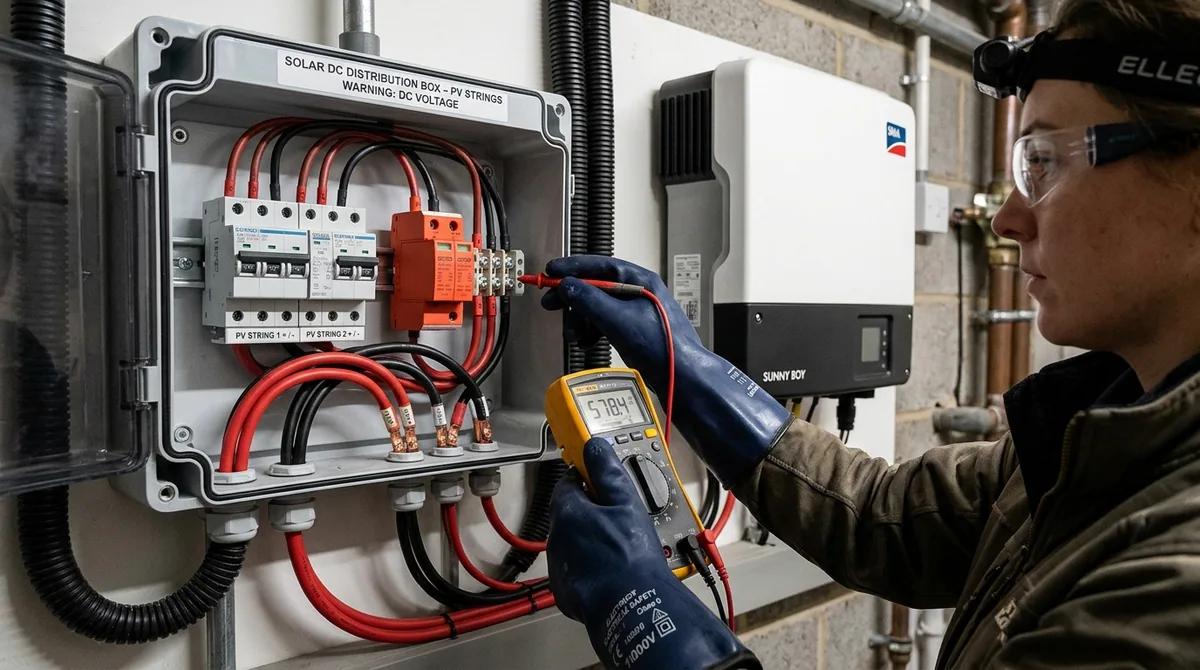
1000V DC Solar Disconnect Breakers vs AC MCBs: Arc Quenching Explained
Read Guide
Solar & Battery
7 min read
Solar DC Circuit Protection: Why AC Breakers Catch Fire on 1000V Arrays and How to Engineer Safe DC Disconnects
Read Guide
Fans & Motors
9 min read
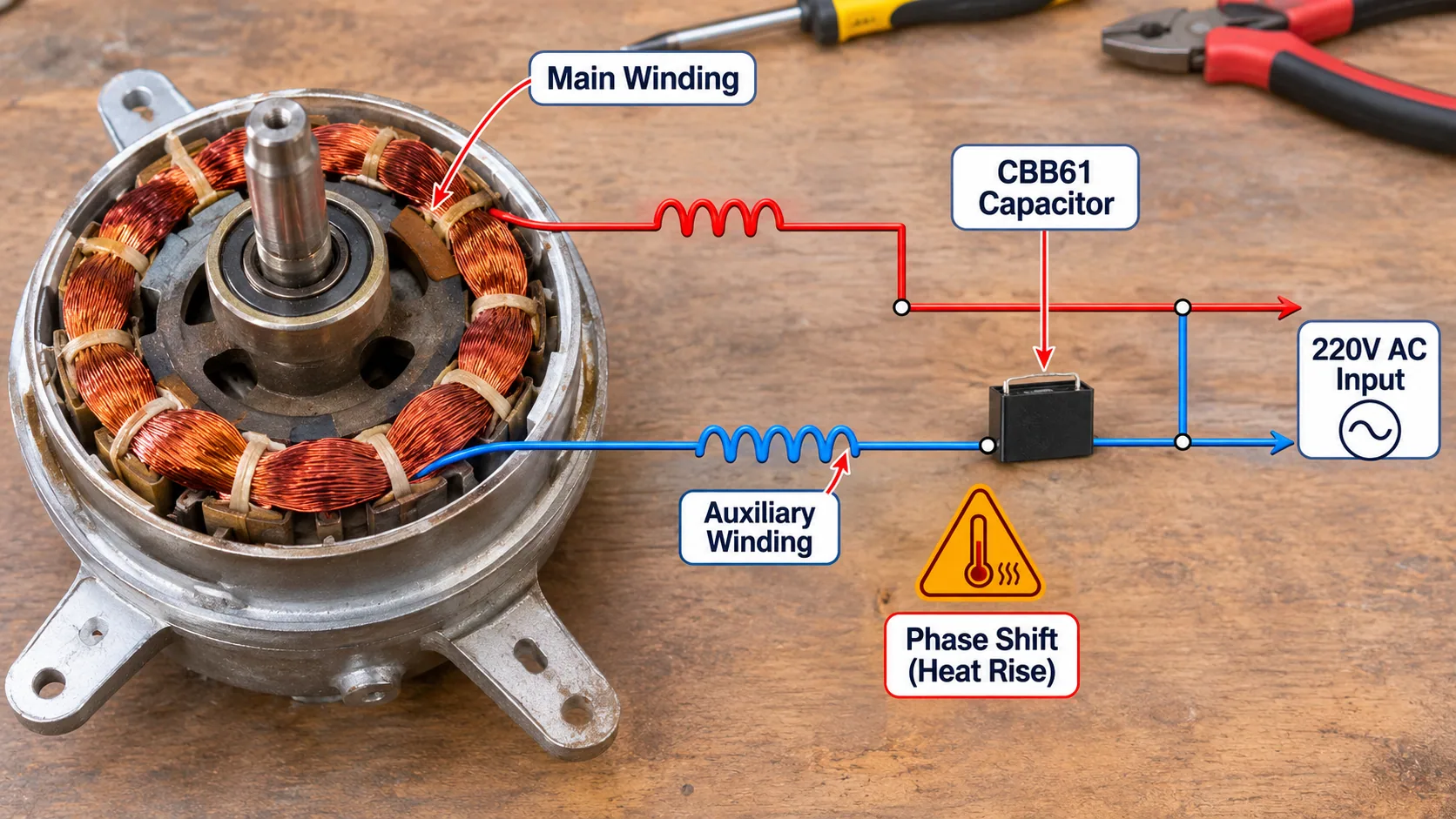
Capacitor Sizing for Ceiling Fans: Microfarad Rating vs Winding Heat Rise
Read Guide