
The Crisis of Improper Breaker Selection in Pakistan's Solar Market
As Pakistan transitions toward decentralized energy, the surge in 5kW to 100kW solar installations across Punjab and Sindh has introduced a critical safety gap. Many local installers, in a bid to reduce costs, often substitute genuine 1000V DC Solar Disconnect Breakers with standard AC MCBs (Miniature Circuit Breakers) intended for WAPDA 220V/400V distribution. This practice is not just a technical violation; it is a fire hazard. The fundamental difference lies in how these devices handle the electrical arc generated during a fault or manual disconnection.
Physics of the Arc: AC Zero-Crossing vs. DC Continuous Plasma
In a 50Hz WAPDA system, the voltage and current oscillate sinusoidally. Every 10 milliseconds, the current naturally hits zero. When an AC MCB opens its contacts, the resulting arc is naturally extinguished at the next zero-crossing point. However, in a Photovoltaic (PV) array, the current is Direct Current (DC). There is no zero-crossing. If a breaker opens under a 600V or 1000V DC load, the air between the contacts ionizes, creating a continuous plasma arc reaching temperatures over 3,000°C.
Click to expand
Magnetic Blowout: The Secret of DC Breakers
To handle the persistent DC arc, manufacturers like Schneider, ABB, and Chint integrate permanent magnets into their DC-rated breakers. These magnets create a magnetic field that exerts a Lorentz force on the arc, literally 'blowing' or stretching the arc into the arc chute. The arc chute consists of a series of metal splitter plates that divide the long arc into several smaller arcs, increasing the total arc voltage until it exceeds the system voltage (V_arc > V_system), forcing the current to zero.
Engineering Comparison
Solar DC Breaker vs AC Breaker Matrix
Detailed diagnostic comparison for isolating true phase faults versus residual earth leakage under Pakistani installation conditions.
Internal Construction and Material Science
DC breakers feature significantly wider contact gaps than their AC counterparts. In a high-voltage solar string (e.g., 18 panels in series producing ~750V Voc), a narrow gap is easily jumped by the high-voltage potential. Furthermore, DC contacts are often plated with silver-tungsten alloys to resist the aggressive erosion caused by DC plasma. Using a standard 7/36 or 7/29 flexible cable (often used for smaller loads in Pakistan) without proper ferrules in these breakers can lead to localized heating, but the breaker's internal design is what prevents the ultimate failure.
Pro Tip
Workshop Diagnostic: Polarity Sensitivity
Critical Installation Check
Many DC breakers are polarity-sensitive (+/-). If you wire a polarized DC breaker backward, the magnetic blowout will pull the arc *away* from the chute and into the plastic housing, melting the breaker instantly during a fault. Always check the '+' and '-' symbols on the casing before tightening the terminals.
Environmental Derating in Pakistan
In regions like Multan or Jacobabad, where ambient temperatures in the shade exceed 45°C, the thermal trip mechanism of the breaker must be derated. A breaker rated for 32A at 25°C may only safely carry 25A-26A in a hot DCDB (Distribution Box) exposed to direct sunlight. We recommend using high-quality brands such as Pakistan Cables or Fast Cables for the interconnects, ensuring the cross-sectional area (usually 6mm² or 10mm² for DC strings) is sufficient to minimize voltage drop and heat generation.
Temperature Derating Table
Typical 32A DC Breaker in 45°C+ Punjab Summer
Standardizing the DCDB Box
A proper DCDB (DC Distribution Box) should consist of more than just a breaker. It requires a Surge Protective Device (SPD) to handle atmospheric lightning and a fuse for each string. In Pakistan, where neutral-to-earth voltages can fluctuate due to poor WAPDA grounding, ensuring the DC side of the solar system is completely isolated and correctly broken by a 2-Pole DC breaker (breaking both positive and negative) is the only way to ensure safety during maintenance.
Final Conclusion for Pakistani Solar Technicians
The cost difference between a cheap AC MCB (approx. 500-800 PKR) and a certified 1000V DC Breaker (approx. 3,500-6,000 PKR) is negligible when compared to the cost of a 1.5 million PKR solar system or, more importantly, the safety of a household. At Apka Rafique, we strictly mandate the use of DC-rated switchgear for all PV installations. The physics of DC arc quenching does not allow for compromise. Always verify the 'DC' marking and the voltage rating on the breaker before installation.
Topics & Tags:#Solar DC Breaker#Arc Quenching#Photovoltaic Safety#DCDB Installation#Solar Engineering Pakistan
Further Technical Reading
View allRelated Articles & Guides
Solar & Battery
8 min read
Calculate Home Load for Solar and UPS: The Master Electrician’s Guide
Read Guide
Solar & Battery
7 min read
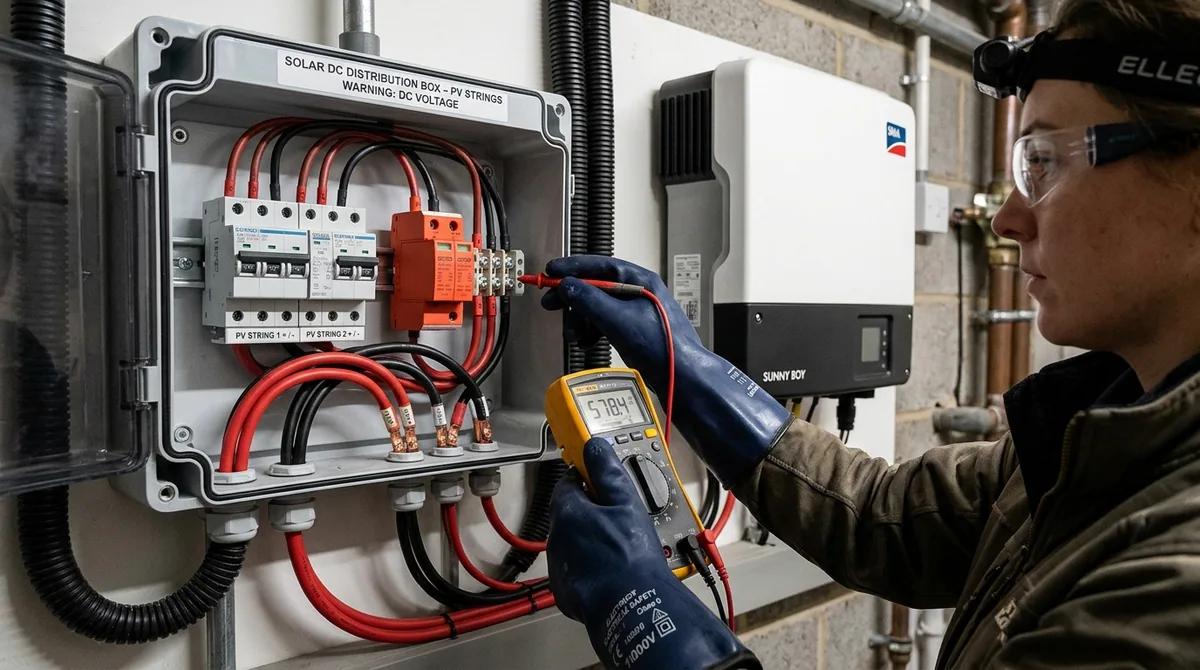
Solar DC Circuit Protection: Why AC Breakers Catch Fire on 1000V Arrays and How to Engineer Safe DC Disconnects
Read Guide
Fans & Motors
9 min read
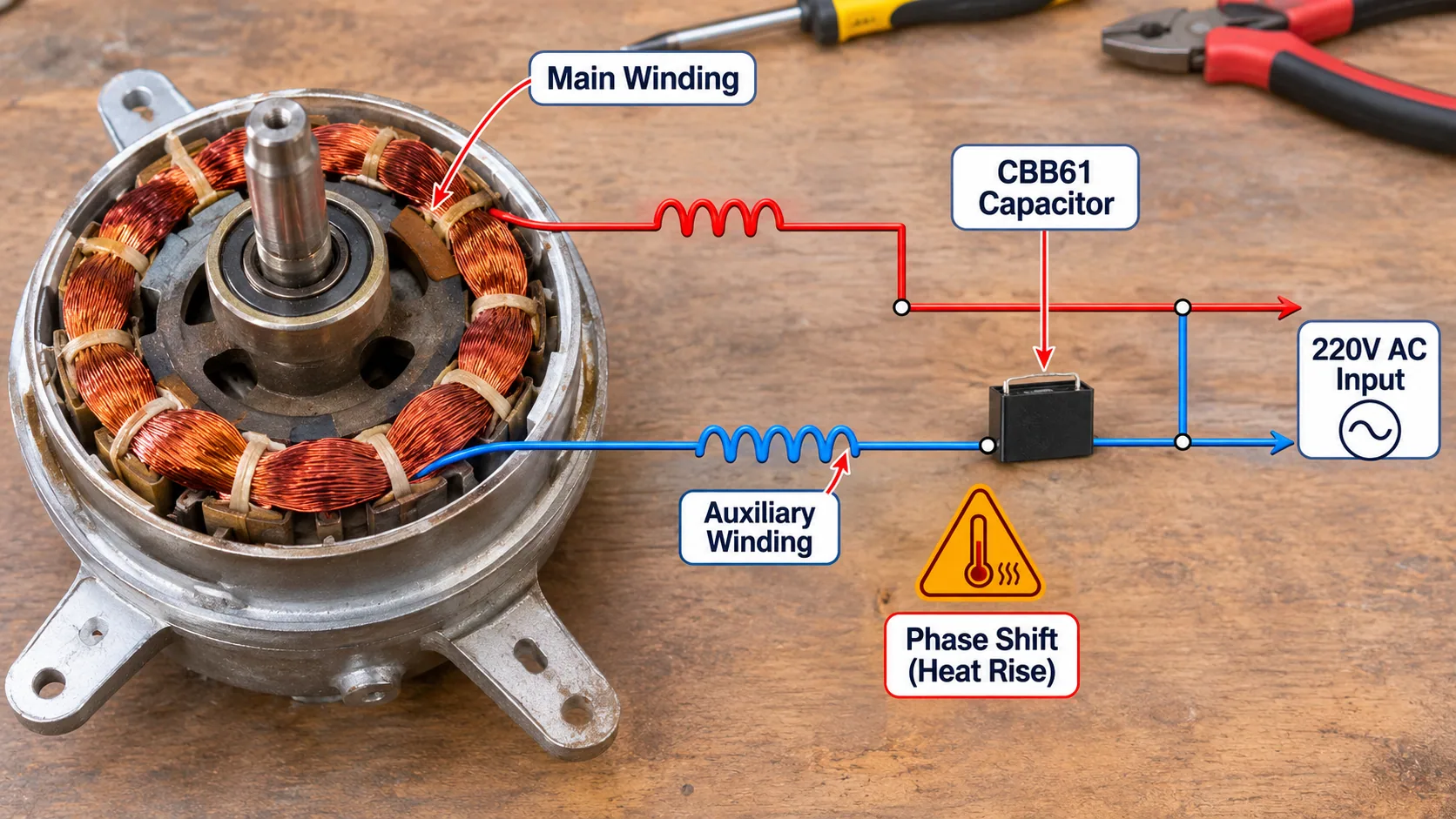
Capacitor Sizing for Ceiling Fans: Microfarad Rating vs Winding Heat Rise
Read Guide